Thursday, October 18, 2012
Book Club: Let's Try That Again
The October discussion topic for our modest little book club was to be Janny Wurts' Curse of the Mistwraith. I say was because only one of us in attendance had completed the book -- and she was the one who had recommended it and was enjoying it for the second time. The rest of us were generally a third of the way into the book.
I have to admit, I read maybe 19% into the book and then skimmed another 10% before our session last night. I read and enjoy science fiction and fantasy, so I was well aware that fantasy novels can start out slow as the author establishes the setting and rules of magic. For some reason I found CotM more difficult than usual to engage my interest and comprehension. My personal preference would have been to become grounded with one key character before the whole cast steps on stage. I know novels are supposed to begin in the middle of the action, but there were so many characters, locations, historical events, etc., coming so fast and furious -- I felt overwhelmed. It also didn't help that by the time I settled down to read I was tired and dozing off.
However, by the time I had skimmed a third of the way into the book, I was getting into the story. The other members of our book club had similar experiences. In CofM Wurts has created a dense fantasy setting with an elaborate history and backstory. Definitely not a book for skimming, as I was attempting to do. Wurts has written the novel in a formal style with many descriptive passages -- reminiscent of Victorian novels and appropriate for the tone of the story about a long ago and far away culture. It needs to be approached at a slower pace. And it did hook most of us (one member didn't have her interest piqued and another said she must be too literal-minded to read fantasy).
So -- we've agreed to finish the book and discuss it in November.
Guess I'll go back to the beginning to refresh my memory before continuing where I left off and give the novel more attention.
We also agreed that this is not a book for an e-reader. It contains a glossary of characters and places at the back of the book and I find it a hassle to flip back and forth on my Kindle. Also, the traditional book includes a map, which is missing in our e-books. Bit of a Luddite here when it comes to literature.
Wednesday, October 10, 2012
With the help of Melody Snyder of Simply Organized, we spent two days sorting through our garage. We managed to toss out and recycle quite a bit of stuff. And we discovered a lot of items we'd forgotten about, not to mention all the family mementos stashed away for decades.
My mother found the Meier & Frank gift box containing The Oregonian issue announcing the attack on Pearl Harbor. In an identical box I came across my father's letters written while in the Army. Last night I sorted them by date (1940-45) and began reading the letters.
Rather than take the chance of being drafted my father joined the Oregon National Guard (41st Infantry Division) as a band member (trombone). He'd started playing professionally in Portland, and he was a member of the popular Woody Hite Band. The Guard was stationed at Fort Lewis (Tacoma, Washington) and environs, so he could make weekend trips home when issued a pass.
So far I've read through his 1940 correspondence and I'm well into 1941. My father was not impressed with the Army and he counted down the months of his one year commitment. The infantry made a trip to California (outside San Francisco) for maneuvers and his descriptions of the mock battles are pretty funny. As they prepare for the return north the men are hearing rumors that they may not be released when their time is up.
At midnight last night I decided to go to bed -- I'd not yet come to the December 1941 correspondence.
It's interesting reading the thoughts and feelings of my 20-year-old father. He declared his mother's cooking the best in the world, teased his younger brother who was completing high school, and talked music with his father (violinist with the symphony). He asked about his high school buddies, and complained when the band unit lost several good musicians who returned to civilian life. He repeatedly asked his parents to send more stamps (note the 3 cent price) because they weren't always available at the base canteen. He sent money orders home to have most of his pay deposited in a savings account.
Reading the letters of a young man who'd rather be home playing his trombone with a jazz band and enjoying his mother's cooking is even more poignant knowing what was to come. My grandparents would soon have two sons fighting at opposite ends of the globe.
Friday, September 14, 2012
Feathered Attack Drones
I have no idea when Phantom may have seen Alfred Hitchcock's The Birds, but he's pretty much convinced that the pair of pigeons who insist on establishing a nest in the covered arena are deadly.
I can't say as I blame him for being startled by the sudden swoop of Mr. Pigeon arriving at the nest where Mrs. Pigeon is brooding. But once the pigeons were on the move, Phantom was more focused on the feathered "attack drones" than he was on me.
Apparently the greenhouses barely moving in the light breeze were more of a threat than the scolding scrub jay that flew out of the blackberries. Although, Phantom kept watch on the jay, too.
It's just one thing after another for my pudgy gray Arabian gelding.
By the way, what's with those dingy pigeons trying to nest when the Canada geese are heading south for the winter?
Tuesday, September 4, 2012
Apparently no one is being taught to stop and look both ways before stepping off the curb. Granted, pedestrians are supposed to have the right of way. However, they might at least give drivers a clue that they will be crossing the street in front of them.
Some years ago while driving slowly through a congested area I noticed two teenage girls walking on the sidewalk to my right in the opposite direction. They were involved in a conversation and giving their attention to each other. Imagine my surprise when they suddenly made a right turn in front of me at the crosswalk. With no "body language" signs that they would be crossing the street, no stopping at the curb to check the oncoming traffic, and no eye contact with the closest drivers -- they simply executed a right turn and stepped off the curb into the street without a break in their conversation.
It happened to me again today. This time it was two teenage boys walking in the same direction I was driving. I was making a right turn into the post office and had stopped for two pedestrians who were in the driveway. Just before I made my right turn into the parking lot, the boys stepped off the curb right in front of me. Once again, no body language indicating their intent to cross the street, no eye contact with me to make sure that I saw them, no stop at the curb before crossing.
Last week at the park children were dashing across the drive on their way back to the parking lot without looking for cars. Fortunately, I expected as much and had slowed to a creep.
Today a woman was so intent on her smart phone she didn't notice I was backing out of a parking slot straight at her. Good thing I saw her before she noticed me. Months ago I had another encounter with a woman walking across the grocery store parking lot with a cell phone to her ear. Didn't look right or left -- just walked in front of me as I was leaving.
I was taught to stop at the curb and look both ways before crossing the street. As a human being it takes a few close calls to take the lesson seriously. After years as a pedestrian in downtown Portland I learned to always look over my left shoulder for drivers making a right turn before I crossed the street. Making eye contact with drivers was the surest method to make sure one was seen before entering the crosswalk.
I don't want to hit a pedestrian. I don't want to run over a child. I don't want to crumple a bicyclist. But as a driver I have a lot to watch out for. Like vehicles that are way bigger than our compact car. Other drivers who can't stay inside their lane or otherwise flaunt traffic laws. Bicyclists who are smaller than a car and faster than a pedestrian. I therefore use any and every clue I can observe to assure everyone's safety. So it would help me greatly if pedestrians would at the very least give a hint that they are desirous of being on the opposite side of the street.
Better yet -- stop at the curb, look both ways, and make eye contact with oncoming drivers even when you have the right of way at a crosswalk.
Sunday, August 26, 2012
Not Another Tangent?!
After attending the Willamette Writers Conference I learned what I need to do for my second draft of Galactic Empress. I also got a few ideas for a sequel while at the conference and these I jotted down for future use.
So I've been merrily working on draft two, thinking I can pretty much salvage the first quarter of the book when I'm suddenly struck by a new story idea.
Actually, it was a very vague idea for a story that came to me from the title of one of our book club reads. What occurred out of the blue was the solution to the story concept. I have a bead on the protagonist, and a dilemma she must resolve at the climactic moment.
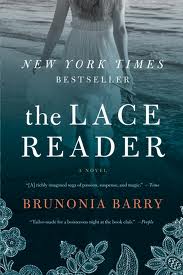
However...I was left with the idea of women who had the supernatural gift of reading lace to interpret the thread of an individual's life. Sort of the next step after the Fates spin a life thread. But I wasn't sure where to go with the idea and how to develop it. Until this week.
The Last Lace Reader is the working title for my latest young adult story. The craft of lace making is strictly controlled, but the art of reading lace has been outlawed. As the elders who have "The Knack" for reading lace pass away, the art is disappearing. When my protagonist discovers she can read lace she is frightened yet fascinated. She could be executed if it is revealed that she has The Knack. Yet her gift could be of use to others.
I haven't yet figured out the setting. So far I've bookmarked sites ranging from the lost continent of Atlantis to steampunk. There will be horses (that's a given). I have a few characters sketched out and a potential image for the protagonist.
I need to at least finish the second draft of Galactic Empress. But I'll jot ideas for The Last Lace Reader as they come to me, and get serious about research and world building at a later time.
Friday, August 17, 2012
For what we hoped would be a fun summer read our book club selected a mystery set in the commercial fishing industry of Astoria, Oregon. A Killing Tide is the first book in the Columbia River Thriller series written by P. J. Alderman.
Regrettably, some of us found the writing clunky and full of cliches -- and the solution less than mysterious.
As best we could determine, this book was Alderman's effort to transition from romance writing to mysteries. Unfortunately, the romance was the worst part of the novel with its strained attempt to create tension between the pair and the requisite bedroom scene full of trite, overdone descriptions. Considering the main character had undergone a bruising encounter with an intruder only hours before the steamy sexual encounter, we found the whole scene hard to believe.
That said, we thought the descriptions of Astoria and its environs were well done, as were the scenes set on the boats. The Columbia River bar is one of the most dangerous locations in the world to navigate and these scenes made for white-knuckle reading.
The mysterious activity that resulted in a murder and arson was fairly easy to guess, and I think all of us knew whodunnit far before the villain was revealed. The characters were a bit stereotypical: the big city cop (or this case arson investigator) who retreats to a small town to escape his past, the gorgeous blonde with an independent streak, the police chief more interesting in an arrest than locating the real murderer, etc.
We all thought the author missed several opportunities to enrich the story. Kaz (Kasmira) Jorgensen and her brother Gary are twins who lost their parents when they were only teenagers. The special relationship of twins and the effect of their parents' death in a boating accident that only Kaz survived were not developed to any depth. The widow of the murdered crewman and their cancer-fighting son might have made for a heart-rending subplot. A plot development involving the mayor seemed dropped in at the last moment and not set up well earlier in the book.
Alderman did keep the pace moving and the stubborn, strong-willed Kaz was anything but a passive heroine. But like the characters in a B horror movie, her survival smarts were set aside for the purposes of plot.
One can only hope that the editors at Bantam Books have improved Alderman's Port Chatham books (her other mystery series). Aside from the Astoria setting, I don't think any of us would recommend this book.
Our next read is In the Land of Invisible Women by Qanta Ahmed. The memoir about life in Saudi Arabia for women should be an eye opener.
Tuesday, August 7, 2012
Another great Willamette Writers Conference. An estimated 850-900 attendees participated over the three days.
So -- I didn't schedule any pitches because Galactic Empress is in first draft and not ready for the light of day. Even less ready than I thought, given what I learned over the weekend. Amazing how much more enjoyable the conference is when not stewing over one's pitch and checking the time for the scheduled 10 minute one-on-one with an agent or editor.
Three workshops stand out for me. Susan Fletcher's "Mining for Theme," Gene Del Vecchio's "Creating Blockbusters," and Lisa Cron's "Wired for Story."
So good stories have a premise or theme. I know that. Most writers know that. But many of us just write the story that wants to get out and hope we'll figure out the theme at some point. Susan Fletcher has been there. Her solution to mining the theme in her own young adult novels is to read her partial or complete draft to look for repetitions. Whether words, settings, actions of characters -- see if anything keeps popping up. There is a good chance that, subconsciously, the author is inserting the premise. Consider the repetitions or similarities and determine if they represent the theme -- the underlying truth of the story. Interestingly enough -- while reading the completed first draft of Galactic Empress I discovered a character activity that I had also inserted in Quest Schmest. The repetition wasn't necessarily in the same story, but in multiple stories. And yes, it is the theme of Galactic Empress and subconsciously I had placed the protagonist in an initial predicament that is an excellent metaphor for the theme. Thanks to Susan Fletcher, I discovered my theme and now I can be more deliberate in developing that theme in the next draft. Yay!
Barnes & Noble is a sponsor of the conference and each year they have a mini book store where they sell writing-related books as well as the books of the workshop presenters. Gene Del Vecchio's Creating Blockbusters caught my eye. Who doesn't want to receive royalty checks from The Da Vinci Code or the Harry Potter books? But I already have a copy of Donald Maas' book about writing a blockbuster. Del Vecchio was the luncheon speaker on Saturday and after his entertaining talk I had to attend his workshop. Del Vecchio's background is in consumer research and it is from this perspective that he approached the question of what makes a hit movie, TV series, book, video game, etc. It turns out that the characteristics that hook and retain an audience are very similar to the elements of The Hero's Journey (Joseph Campbell's study of culture-crossing mythology). As Del Vecchio explained it, the blockbusters connect with the kid in all of us but they are edgy enough for adults to enjoy and thus attract a wider audience. His book helps the writer avoid the dreaded "it's dumb" or "it's boring" review from the 8 to 12-year-old audience.
Of course I rushed back to the B&N table to buy Del Vecchio's book and while there I picked up Lisa Cron's Wired for Story based on the title alone. I've come to the conclusion that humans need stories, and here was a book that supported my viewpoint. As it turned out, at breakfast on Sunday a woman sat down at the table where I was seated with a couple of other attendees. As soon as she said she was a presenter my intuition kicked in and I suspected she was Lisa Cron. Sure enough. Of course I went to her workshop where Ms. Cron explained that human beings think in story and in fact it is critical to our survival. Sure, you can tell a Neanderthal child not to eat the red berries because they're poisonous. Or, you can tell the child a grisly story about a boy from the next clan over who ate the berries and died a horrible death. Through story, humans can envision the future -- the evolutionary characteristic that truly sets us apart. So when the child comes across the shiny red berries he recalls the story and imagines the horrible death that awaits him should he succumb to the temptation. Because it's important that we pay attention to these life-saving stories, our brain is wired to tune out incoming information not directly related to the story. And our brain receives the story as if we are engaged in the same activities as the characters. Thus, we can experience various and sundry acts without actually endangering ourselves. As writers, we can access the reader's hard wiring through character, plot, and theme to answer what happens next, how the protagonist is affected, and what it means to the reader.
The cool factor was -- Del Vecchio's poll revealed that elements of The Hero's Journey do indeed resonate with us, and Cron's research presented the scientific basis to explain why this is the case.
Amanda Gersh presented a workshop on believable dialogue for YA novels. The dialogue should feel real, not be real. Read a transcript of a conversation and you'll se why. She also discussed turning off the "parent/teacher filter" when writing. Could be why childless writers are often successful authors with the younger crowd. Pamela Smith Hill's session on writing romance for teens indicated that the age/maturity of the target audience must be considered (lower or upper end of the YA bracket of 12-18). She also demonstrated that being less explicit and having sensitive scenes occur off stage can be effective.
I really enjoyed Susan De Frietas on speculative fiction. She discussed how recent discoveries in science may serve as the inspiration or jump off point for science fiction and fantasy. Talk about the strange phenomenon of quantum physics! "Spooky actions at a distance" may serve a hard science fiction story, or provide the basis for magic in a fantasy novel. The editor's panel that included Tricia Narwani with Del Rey and Melissa Frain with Tor indicated the first page of a manuscript reveals the author's storytelling voice. It's either there or not. When combined with a main character the reader can connect with the editors will work with a writer to overcome plot point issues and inconsistencies in the story. Attendees created a bizarre science fiction world in Denise Vitola's workshop. She reminded us that all of our characters must be living meaningful lives in the world of our story. Screenwriter Miguel Tejada-Flores emphasized the importance of making it clear who the story is about and the character's motivation for the decisions made and actions taken. In her workshop on The Second Draft, Molly Best Tinsley explained that in the first draft the author is writing to herself. The second draft is for the audience. Eric Witchey illustrated the use of irreconcilable differences to create character depth and develop backstory.
Whew! A lot of good stuff to assimilate. Once again I'm glad I decided to spend time with one of my tribes.
Subscribe to:
Posts (Atom)